
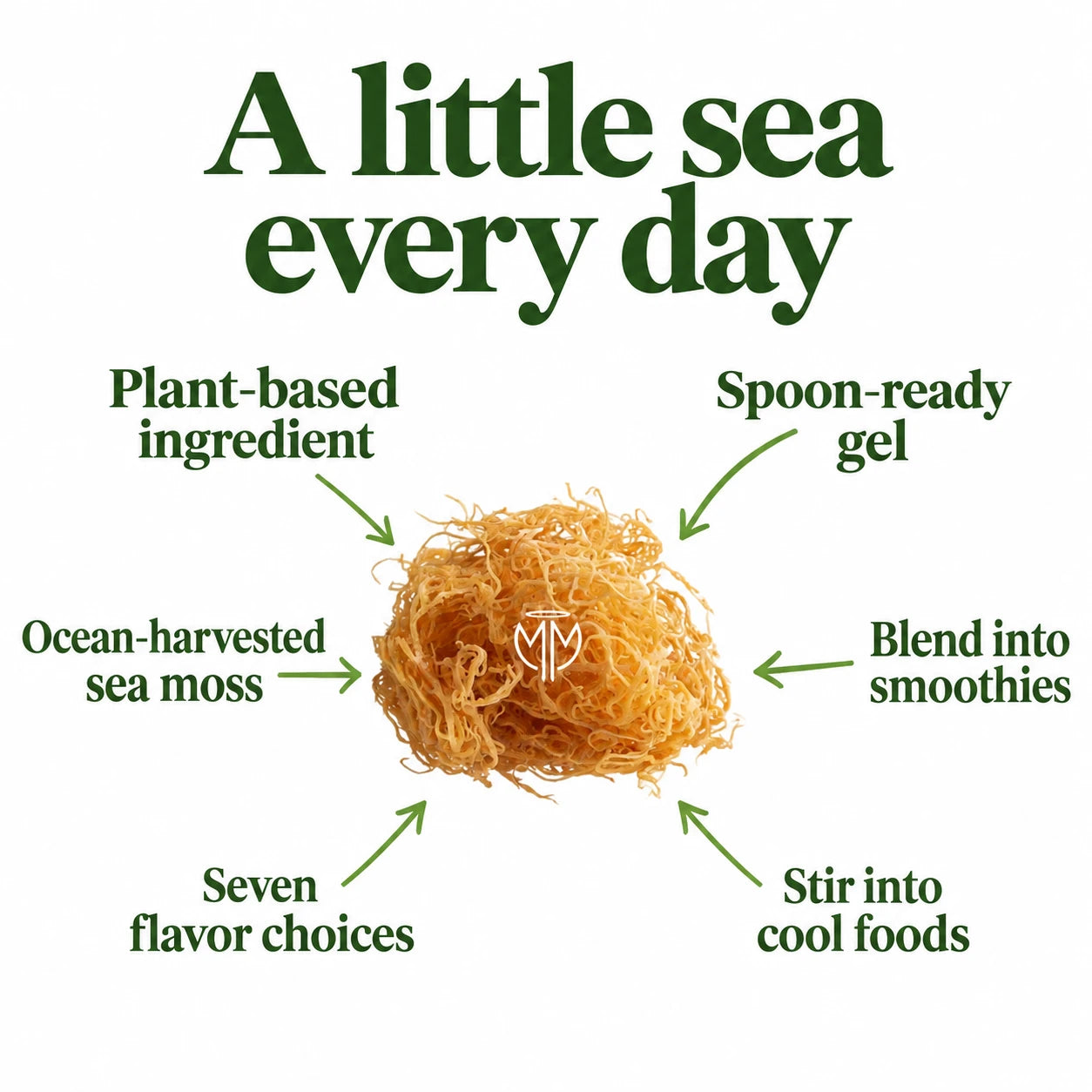
A naturally distinctive food texture
Red seaweeds are sources of gel-forming compounds such as carrageenan. The FAO describes their use for thickening and gelling foods. Those food properties help explain the smooth, spoonable format of prepared sea moss gel.
In your kitchen, texture is a practical benefit: blend gel into a smoothie, stir it into prepared oatmeal or explore a chilled recipe. The finished flavour and consistency depend on the seaweed, water and other ingredients used.
What are the benefits of sea moss gel?
The clearest starting point is its practical food qualities: a prepared, spoonable texture, a seaweed ingredient and a format that mixes easily into recipes. Nutritional benefits depend on the amounts a particular serving supplies. Our guide to what sea moss is and gel, raw and tablet comparison explain how those formats differ.
The FAO’s guide to seaweeds used as food describes Irish moss’s historical use as a thickening ingredient. That culinary history is a useful foundation for choosing how to enjoy it today.
The original benefits visual
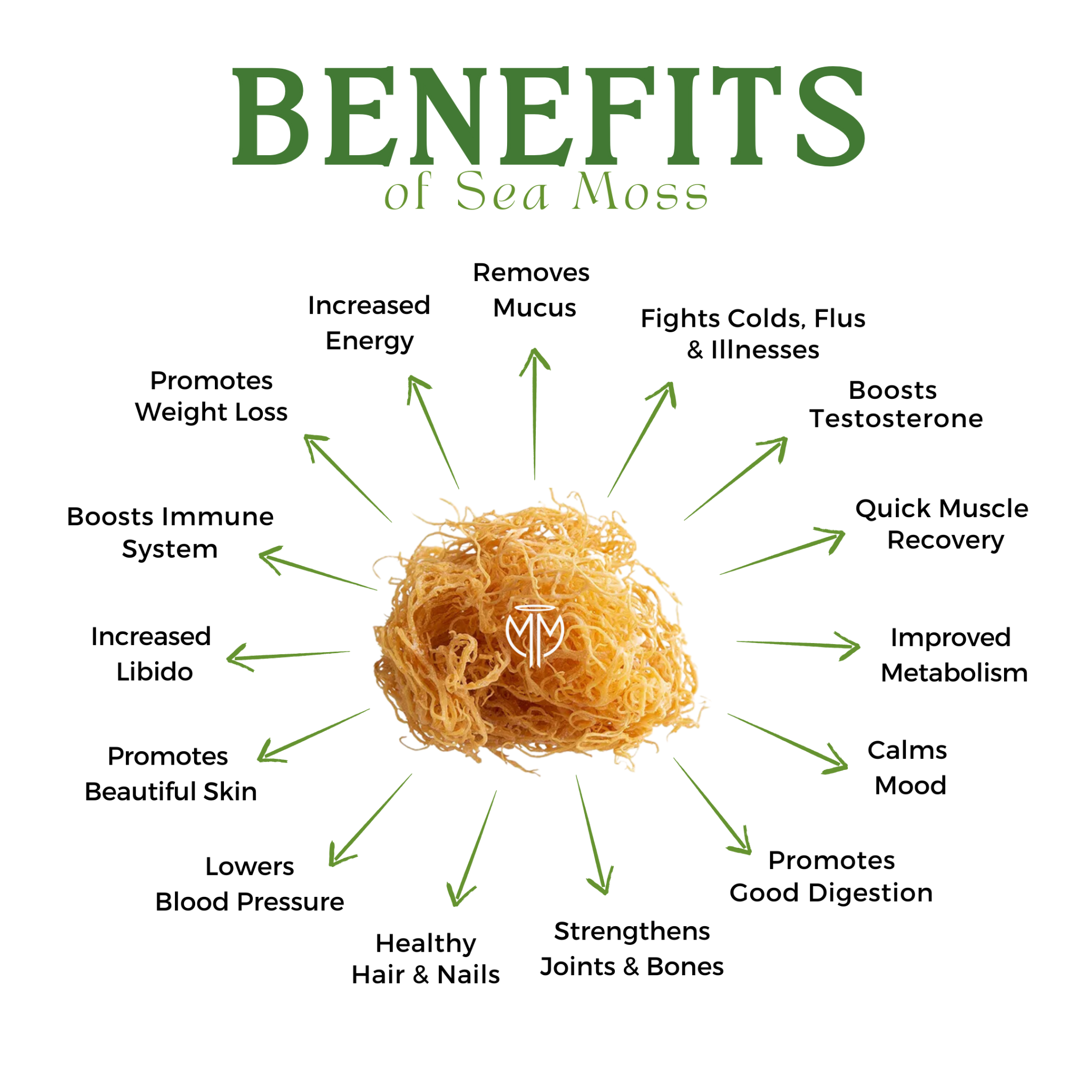
The supplied artwork is shown unchanged. Its claims about weight loss, blood pressure, testosterone and fighting illness are promotional claims, rather than established effects of Miracle Moss. The useful next step is to understand individual nutrients and measured serving amounts.
Nutrients have specific jobs
Iodine is needed to make thyroid hormones. Zinc contributes to normal immune function and to making proteins and DNA. These are established roles of the nutrients themselves.
The amount delivered by a particular gel depends on species, origin, preparation and serving size. A list of mineral names cannot tell you how much a spoonful provides. Look for product-specific composition information when comparing nutrition.
Seaweed iodine can vary substantially, and too much iodine can affect thyroid function. If you need to manage iodine intake, discuss the product and its measured amounts with your clinician.
Immune function, energy, skin and bones: the nutrient story
People searching for sea moss benefits often ask about immunity, energy, healthy skin or strong bones. The following table explains established mineral roles. It is a guide to physiology, not a nutrient analysis or a promise that a serving of gel supplies an effective quantity.
| Nutrient | Established role | Read more |
|---|---|---|
| Iodine | Needed to make thyroid hormones, which help regulate metabolism. | NIH iodine guide |
| Zinc | Contributes to normal immune function, cell division and wound healing. | NIH zinc guide |
| Magnesium | Involved in energy production, nerve signalling and muscle function. | NIH magnesium guide |
| Iron | Helps haemoglobin carry oxygen around the body. | NIH iron guide |
| Calcium | Supports bones and teeth and is involved in muscle movement. | NIH calcium guide |
The question for every nutrient is the same: how much is in the serving you actually eat? Visit How It Works to see the connected roles, then look for measured information about the product you are comparing.
How to read a mineral claim
Separate three questions: identity, quantity and effect. Finding an element identifies a component. A measured amount tells you its quantity. An effect requires evidence about the amount, use and outcome being claimed.
A “92 minerals” graphic is a visual introduction to a claim, not a finished Nutrition Facts panel. Trace presence and a meaningful contribution to dietary needs are different measurements. Our sea moss buying checklist shows what to ask about sourcing and testing, and the full-spectrum guide explains why colour is not a nutrition score.
Choose a routine you will enjoy
Convenience and flavour matter. A prepared jar saves the hands-on preparation involved in raw sea moss, while seven Miracle Moss flavours give you different ways to match your food preferences.
- Original: a flexible addition to favourite recipes.
- Mango or Pineapple: tropical flavour for chilled fruit blends.
- Berry Mix: a fruit-led spoonful or smoothie addition.
- Botanical choices: explore the full ingredient list before choosing.
Follow your jar’s serving and cold-care directions. Explore flavours, ingredients and bundles →
How much sea moss gel should I take, and how do I store it?
Miracle Moss’s usual serving direction is 1–2 tablespoons daily, within the guidance on your jar. Measure your serving rather than assuming every spoon is the same size. Use a clean utensil, close the lid and refrigerate promptly.
For recipe ideas, try a chilled mango smoothie, prepared oatmeal or a fruit bowl. For longer storage, follow the freezing directions supplied with your jar. Read our sea moss gel storage guidance and cold-care guide for the practical steps from delivery to fridge.
Questions to answer before buying sea moss in Canada
- What is in this flavour? Check the full ingredient list, including fruits and botanicals.
- What format fits my routine? Choose prepared gel for convenience or raw sea moss for hands-on preparation.
- What will delivery involve? Review the Canada-wide delivery information and cold-care details for your address.
- Which jar should I start with? Compare the seven flavours on the Miracle Moss sea moss gel page.
For premium sea moss gel in Edmonton, begin with a flavour and a practical plan for keeping it chilled. Clear ingredients, thoughtful preparation and enjoyable use give you concrete reasons to choose a jar.
Sources & further reading
FAO: carrageenan and food texture · NIH: iodine · NIH: zinc · Northwestern Medicine: sea moss evidence